The Economics of Hosting the Olympic Games
Published
Updated
The costs of hosting the Olympics have skyrocketed, while the economic benefits are far from clear. The 2026 Winter Olympic Games in Milan and Cortina d’Ampezzo are focusing on long-term infrastructure and cutting unnecessary costs, despite construction delays.
- The massive costs and dubious benefits associated with hosting the Olympic Games have led to criticism of the host city selection process.
- Many economists have called for reforms to the process, including reducing the cost of bidding and encouraging cities to develop more sustainable development strategies.
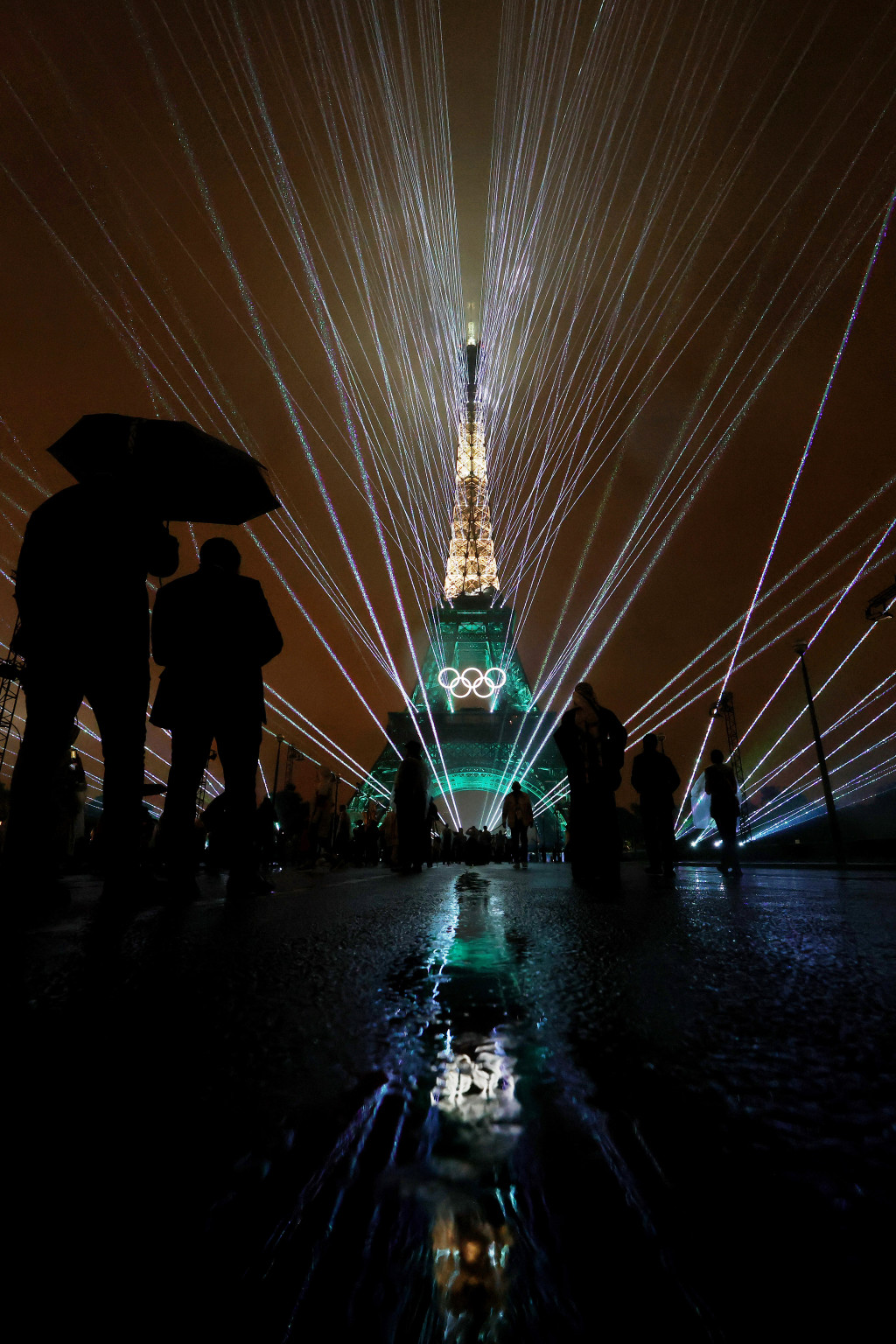
- Organizers have sought to break the streak of financial strain. The 2024 Paris Olympics was the cheapest in decades, and the 2026 Winter Olympics will be the first to be cohosted by two cities.
Introduction
The Olympics have evolved dramatically since the first modern Games were held in 1896. In the second half of the twentieth century, both the costs of hosting and the revenue produced by the spectacle grew rapidly, sparking controversy over the burdens host countries shouldered. A growing number of economists argue that the benefits of hosting the Games are at best exaggerated and at worst nonexistent, leaving many host countries with large debts and maintenance liabilities. These analysts suggest that Olympic committees reform the bidding and selection process to incentivize realistic budget planning, increase transparency, and promote sustainable investments that serve the public interest. Still, the International Olympic Committee (IOC) and its supporters contend that hosting can raise a city’s global profile and generate economic benefits through tourism and investments in infrastructure.
Recent Games have highlighted the ongoing debate over the costs and benefits of hosting such a mega-event. The 2020 Tokyo Olympics continued a decades-long streak of overrunning costs, which rose more than expected after an unprecedented delay due to the COVID-19 pandemic. With other former hosts still struggling with the debts they incurred, some candidate cities for future Games have withdrawn their bids or scaled down their plans. In response to these financial pressures, the IOC has sought to loosen restrictions and reduce the burden on host cities.
When did the costs of hosting the Games become a concern?
For much of the twentieth century, the staging of the Olympic Games was a manageable burden for host cities. The events were held in wealthy countries, either in Europe or the United States, and in the era before television broadcasting, hosts didn’t expect to make a profit. Instead, the Games were publicly funded, with these countries better positioned to bear the costs due to their larger economies and more advanced infrastructure.
The 1970s marked a turning point, writes economist Andrew Zimbalist, author of three books about Olympic economics. The Games were growing rapidly, with the number of Summer Olympics participants almost doubling from the early twentieth century and the number of events increasing by a third during the 1960s. But the killing of protesters by security forces ahead of the 1968 Mexico City Games and the Palestinian militant group known as the Black September Organization’s fatal terrorist assault on Israeli athletes at the 1972 Munich Games tarnished the image of the Olympics, and public skepticism of taking on debt to host the Games grew.* In 1972, Denver became the first and only chosen host city to reject the opportunity to host after voters passed a referendum refusing additional public spending for the Games. A 2024 University of Oxford study estimated that, since 1960, the average cost of hosting has been triple the bid price.
The 1976 Summer Olympics in Montreal came to symbolize the fiscal risks of hosting. The projected cost of $124 million was billions below the actual cost, largely due to construction delays and cost overruns for a new stadium, saddling the city’s taxpayers with some $1.5 billion in debt that took nearly three decades to pay off.
Los Angeles was the only city to bid for the 1984 Summer Olympics, allowing it to negotiate exceptionally favorable terms with the IOC. Most importantly, Los Angeles was able to rely almost entirely on existing stadiums and infrastructure rather than promise lavish new facilities to entice the IOC. That, combined with a sharp jump in television broadcast revenue, made Los Angeles the first city in decades to turn a profit hosting the Olympics, finishing with a $215 million operating surplus.
Los Angeles’ success led to a rising number of cities bidding—from two for the 1988 Games to twelve for the 2004 Games. This allowed the IOC to choose the cities with the most ambitious—and expensive—plans. In addition, as researchers Robert Baade and Victor Matheson point out, bidding by developing countries more than tripled after 1988. Countries such as China, Brazil, and Russia have been eager to use the Games to demonstrate their progress on the world stage.
However, these countries invested massive sums to create the necessary infrastructure. Costs spiraled to more than $50 billion for the 2014 Winter Games in Sochi, $20 billion for 2016 Summer Games in Rio de Janeiro, and a reported $39 billion for the 2022 Winter Games in Beijing, according to Business Insider’s estimate. (China said the Games cost just $4 billion.)
These costs have led some cities to withdraw their bids for upcoming Games . In 2019, the IOC adopted a process to make bidding less expensive, extending the bidding period and broadening the geographic requirements to allow multiple cities, states, or countries to cohost. But this has not yet translated into more bidders. In 2021, Brisbane, Australia—the 2032 Summer Games’ host—became the first city to win an Olympic bid unopposed since Los Angeles in 1984.
To mitigate costs and support the creation of new facilities, the IOC has begun hosting Olympic Games across multiple cities within a host country, allowing greater use of existing facilities and housing. This year’s Winter 2026 Olympics in Milan and Cortina d’Ampezzo, Italy—known as the Milano Cortina 2026 Games—will mark the first-ever Olympics to be cohosted by two cities. The Games will also reuse materials from the Paris Olympics two years prior, including medical equipment.
What costs do cities incur for hosting the Games?
Cities invest millions of dollars in evaluating, preparing, and submitting a bid to the IOC. The cost of planning, hiring consultants, organizing events, and the necessary travel consistently falls between $50 million and $100 million. Tokyo spent as much as $150 million on its failed 2016 bid, and about half that much for its successful 2020 bid, while Toronto decided it could not afford the $60 million it would have needed for a 2024 bid.
Once a city is chosen to host, it has around a decade to prepare for the influx of athletes and tourists. The Summer Games are far larger, attracting hundreds of thousands of foreign tourists to watch more than ten thousand athletes compete in about three hundred events, compared with under three thousand athletes competing in about one hundred events during the Winter Games. The most immediate need is the creation or upgrading of highly specialized sports facilities such as cycling tracks and ski-jumping arenas, the Olympic Village, and a venue large enough to host the opening and closing ceremonies.
Tokyo spent as much as $150 million on its failed 2016 bid, and Toronto decided it couldn’t afford its 2024 bid.
There is also usually the need for more general infrastructure, especially housing and transportation. The IOC requires cities hosting the Summer Games to have a minimum of forty thousand available hotel rooms, which in Rio’s case necessitated the construction of fifteen thousand new hotel rooms. Roads, train lines, and airports also need to be upgraded or constructed.
Altogether, these infrastructure costs range from $5 billion to more than $50 billion. Many countries justify such expenditures in the hopes that the spending will outlive the Olympic Games. For instance, some 85 percent [PDF] of the 2014 Sochi Games’ more than $50 billion budget went to building non-sports infrastructure from scratch. More than half of the Beijing 2008 budget of $45 billion went to rail, roads, and airports, while nearly a fourth went to environmental clean-up efforts.
Operational costs make up a smaller but still significant chunk of hosts’ Olympics budgets. Security costs have escalated after the 9/11 attacks—Sydney spent $250 million in 2000 while Athens spent over $1.5 billion in 2004, and costs have remained between $1 billion and $2 billion since. (They were even higher during the COVID-19 pandemic in 2022, when Tokyo reportedly shelled out $2.8 billion for disease prevention alone.)
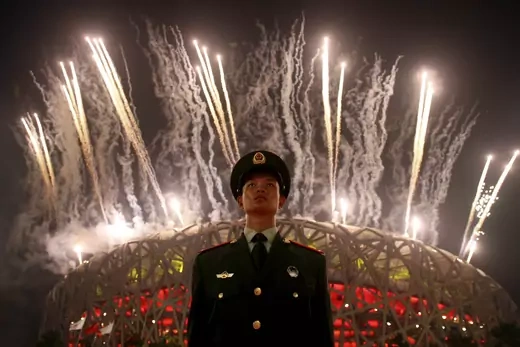
Also problematic are so-called white elephants, or expensive facilities that, because of their size or specialized nature, have limited post-Olympics use. These often impose costs for years to come. Sydney’s Olympic stadium costs the city $30 million a year to maintain. Beijing’s famous “Bird’s Nest” stadium cost $460 million to build, requires $10 million a year to maintain, and sat mostly unused after the 2008 Games, until the city used it again to host the 2022 Winter Games. Almost all of the facilities built for the 2004 Athens Olympics, whose costs contributed to the Greek debt crisis, are now derelict. In Montreal, the Olympic stadium known as the Big O is frequently stylized as the “Big Owe” for its massive costs; in 2024, Quebec’s government said it would spend $870 million to replace the rarely used stadium’s roof for the third time, leading critics to push for its demolition.
Economists say the Games’ so-called implicit costs must also be considered. These include the opportunity costs of public spending that could have been spent on other priorities. Servicing the debt that is left over after hosting the Games can burden public budgets for decades. It took Montreal until 2006 to pay off the last of its debt from the 1976 Games, while Greece’s billions in Olympics debt helped bankrupt the country.
The debt and maintenance costs of the 2014 Sochi Winter Games will cost Russian taxpayers nearly $1 billion per year for the foreseeable future, experts estimate. But while some in Sochi see the unused stadiums and overbuilt facilities as a waste, other residents argue that the Games spurred spending on roads, water systems, and other public goods that wouldn’t have otherwise happened.
How do the benefits compare to the costs?
As the costs of hosting have skyrocketed, revenues cover only a fraction of expenditures. Beijing’s 2008 Summer Olympics generated $3.6 billion in revenue, compared with over $40 billion in costs, and Tokyo’s delayed Summer Games generated $5.8 billion in revenue and $13 billion in costs. What’s more, much of the revenue doesn’t go to the host—the IOC keeps more than half of all television revenue, typically the single largest chunk of money generated by the Games.
Impact studies carried out or commissioned by host governments before the Games often argue that hosting the event will provide a major economic lift by creating jobs, drawing tourists, and boosting overall economic output. However, research carried out after the Games shows that these purported benefits are dubious.
In a study of the 2002 Salt Lake City Games, for example, Matheson, along with economists Robert Baumann and Bryan Engelhardt, found a short-term boost [PDF] of seven thousand additional jobs—about one-tenth the number promised by officials—and no long-term increase in employment. As a study by the European Bank for Reconstruction and Development explains, the jobs created by Olympics construction are often temporary, and unless the host region is suffering from high unemployment, the jobs mostly go to workers who are already employed, blunting the impact on the broader economy.
Economists have also found that the impact on tourism is mixed, as the security, crowding, and higher prices that the Olympics bring dissuade many visitors. Barcelona, which hosted in 1992, is cited as a tourism success story, rising from the eleventh to the sixth-most popular destination in Europe after the Summer Games there, and Sydney and Vancouver both saw slight increases in tourism after they hosted. But Baade and Matheson found that Beijing, London, and Salt Lake City all saw decreases in tourism during the years that they hosted the Games.
Economists have found that the Olympics’ impact on tourism is mixed, given the security, crowding, and higher prices.
In Brazil, the first South American country to host the Olympics, the cost of the 2016 Games exceeded $20 billion, with the city of Rio alone shouldering at least $13 billion. Challenged by the country’s deep recession, Rio required a $900 million bailout from the federal government to cover the cost of policing the Olympics and was unable to pay all of its public employees. The city also had to invest heavily in a broad range of infrastructure, which was meant to reinvigorate some of its struggling neighborhoods, yet in the aftermath most venues have been abandoned or barely used.
The 2024 Paris Olympics focused on updating widely used city infrastructure ahead of the Games, including cleaning the city’s famously polluted Seine River, which French officials claimed benefited the overall public. Yet the Games’ effect on the country’s economy was lower than anticipated. A national audit [PDF] found that the 2024 Games brought only a “modest” 0.07 percent increase to France’s annual gross domestic product (GDP). One study estimated that the 2026 Winter Olympics will bring roughly $6.3 billion to Italy through tourism and immediate spending—a revenue that narrowly exceeds the Games’ anticipated budget of $6.2 billion. Still, Italy’s economy minister hopes that the Games will boost Italy’s stagnating GDP, and its government hopes to reap longer-term economic benefits from tourism and updates made to the country’s travel infrastructure.
Ultimately, there is little evidence for an overall positive economic impact. The National Bureau of Economic Research has published findings that hosting has a positive impact on a country’s international trade. But economists Stephen Billings and Scott Holladay found no long-term impact of hosting on a country’s GDP.
How did the pandemic affect the cost of the Tokyo Games?
The Games cost $13 billion to host, according to an independent Japanese government agency, more than double what organizers had projected when Japan won hosting duties in 2013. However, the final cost was still less than half of what the same auditors predicted in 2019, and in line with the costs incurred by other recent summer hosts. (Economists say this figure excludes land and transportation costs, with the true total somewhere between $19–$34 billion.)
Costs ballooned in part because pandemic restrictions required the omission of spectators, eliminating an estimated $800 million in income from ticket sales and triggering hundreds of thousands of hotel cancellations. The city also had to invest heavily in infrastructure, much of which has dubious long-term utility. Building new venues cost an estimated $3 billion, including $1.4 billion for a new National Stadium that sat empty during the Games. Tokyo privatized the stadium in April 2025, having sold the right to operate it for thirty years in return for just a quarter of its construction costs.
Is the total spending for hosting the Olympics going down?
While the costs of hosting the Olympics has not seemed to significantly decline, recent host cities have sought to enact cost-saving measures, with support of the IOC. Paris budgeted about $8 billion for the 2024 Olympics when it won its bid in 2017. The French Court of Auditors, the country’s national audit body, estimated in a September 2025 report [PDF] that the French government had shouldered $7.85 billion for the Paris Games in total.
By these estimates, Paris hosted the cheapest Summer Games in decades, compared to the approximately $13 billion budget for the 2020 Tokyo Games and the more than $20 billion budget for the 2016 Rio Games. Organizers say the decision to rely almost entirely on existing venues in Paris and other French cities, such as those built for the annual French Open and the 2016 European Football Championship, helped keep costs low.
The 2026 Milano Cortina Games will be held across two Italian cities and mostly utilize existing venues. Its estimated total cost of $6.2 billion is one of the lowest price tags for an Olympic Games in recent decades. However, preparations to host were dogged with familiar obstacles. Several projects—including the construction of a new sliding center in Cortina and an ice hockey venue in Milan—ran over budget or faced delays. Still, the IOC has touted both the 2024 Paris and 2026 Milano Cortina Games as successes and examples of how the Olympics can be more sustainable.
How could the Olympics be made more manageable?
A consensus has grown among economists that the Olympic Games need reforms to make them more affordable for hosts. Many have pointed out that the IOC bidding process encourages wasteful spending by favoring potential hosts who present the most ambitious plans. This so-called winner’s curse means that over-inflated bids—often pushed by local construction and hospitality interests—consistently overshoot the actual value of hosting. Observers have also criticized the IOC for not sharing more of the fast-growing revenue generated by the Games.
Corruption has also dogged the IOC selection process. Bribery scandals marred the 1998 Nagano and 2002 Salt Lake City Games. In 2017, the head of Rio’s Olympic committee was charged with corruption for allegedly making payments to secure the Brazil Games, and allegations of illegal payments surfaced in the 2020 Tokyo selection.
In response, the IOC under former President Thomas Bach promoted reforms to the process, known as the Olympic Agenda 2020. These recommendations include reducing the cost of bidding, allowing hosts more flexibility in using already-existing sports facilities, encouraging bidders to develop a sustainability strategy, and increasing outside auditing and other transparency measures. It was succeeded by Olympic Agenda 2025+5 in 2021, after the IOC concluded that 88 percent of the Olympics Agenda 2020 was completed. The Olympic Agenda 2020+5 focused on issues such as sustainability and revenue generation in a post–COVID environment. Current IOC President Kristy Coventry has begun reviewing the process of selecting host cities—including a pause on deciding the 2036 Games host to examine how the bidding process can be more inclusive, transparent, and cost-effective.
Some think more drastic measures are necessary. Economists Baumann and Matheson argue that low- and middle-income countries should spare themselves the burden of hosting altogether and the IOC should instead “award the games to rich countries that are better able to absorb more of the costs.” Zimbalist, the Olympics cost hawk, has proposed that one city be made the permanent host, allowing for the reuse of expensive infrastructure. Barring that, many economists argue, any city planning to host should ensure that the Games fit into a broader strategy to promote development that will outlive the Olympic festivities.
Recommended Resources
This 2024 study by Oxford economists Alexander Budzier and Bent Flyvbjerg documents billions in cost overruns for Olympic Games over the past several decades.
ABC News covers how climate change will make hosting Winter Games like this year’s 2026 Olympics more difficult.
For ESPN, Wayne Drehs and Mariana Lajolo investigate the state of Rio’s Olympic infrastructure a year after the games.
Economists Robert Baade and Victor Matheson argue that hosting the Olympics is a poor investment decision.
For Time, Smith College economist Andrew Zimbalist proposes that Los Angeles be made the permanent Olympics host. t
Colophon
Staff Writers
- James McBride
- Noah Berman
Additional Reporting
Kaleah Haddock, Surina Venkat, Clara Fong, and Melissa Manno contributed to this report.
Header image by Joel Saget/AFP/Getty Images.
The Islamic Revolutionary Guard Corps (IRGC)
What Does the U.S. National Guard Do?
Mercosur: South America’s Fractious Trade Bloc

What Does the G20 Do?